


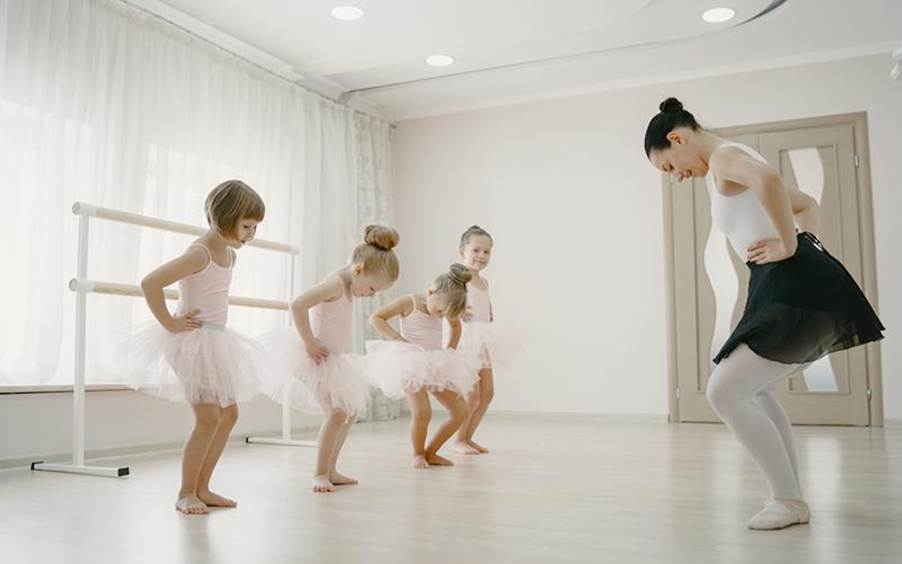
There’s a moment every parent recognises: your child, face scrunched in frustration, trying to master something that looks simple but isn’t. Now, imagine that same determination channelled into a graceful plié or an energetic leap. That’s the hidden beauty of children’s ballet classes. They’re about dancing and problem-solving in motion. Ballet, as it turns out, might be one of the best teachers of resilience out there.
The Ballet Class Dilemma
Every child faces frustration in learning, and ballet is no exception. During children’s ballet classes, the first challenge is often mastering coordination. For many, the initial instinct is to give up when their movements don’t match the instructor’s or their classmates’.
Professional instructors in children’s ballet classes guide young dancers through these moments, helping them break tasks into smaller, achievable steps. A simple plié becomes a lesson in persistence. Over time, students learn that progress is incremental. Ballet builds muscle memory and mindset.
Teamwork in Tutus
Another challenge young dancers face is learning synchronisation. Unlike solo hobbies, ballet often demands that children move in unison, which requires patience, listening, and awareness of others. During group routines, one child’s timing can affect the entire performance.
Through practice and repetition, children’s ballet classes encourage teamwork in a unique way: through movement rather than words. A child learns to glance at others, feel the rhythm, and adjust instinctively, which transfers effortlessly to classroom collaboration and daily interactions. Children who might struggle with sharing or cooperation suddenly find joy in harmony as they move in sync with their peers.
When Balance Falters
Falling is inevitable in dance and in life. When a child loses balance or misses a cue, they’re encouraged not to stop, but to keep going. Ballet instructors teach the value of composure, how to transform errors into movement rather than freeze in embarrassment. This philosophy quietly instils resilience, showing that progress is the goal.
In fact, during a ballet trial class, many young dancers learn their first big life lesson: mistakes are part of it. And often, it’s the recovery that earns the biggest applause.
The Discipline Dilemma
Discipline is one of ballet’s biggest takeaways. Ballet demands repetition, structure, and self-control, which can be challenging for energetic, easily distracted kids.
Through gentle correction and consistent encouragement, instructors in children’s ballet classes help children discover that discipline is empowering. The precision of ballet movements teaches patience, while the reward of improvement reinforces motivation.
Even a short ballet trial class reveals this balance of effort and reward. The moment a child masters a new position or remembers a sequence, the pride they feel fuels their desire to keep improving.
Creative Thinking on the Dance Floor
While ballet might seem rigid, it’s also deeply creative. Many children’s ballet classes incorporate imaginative storytelling into routines. When choreography changes or music cues shift, children must adapt their movements on the spot. This develops problem-solving through improvisation. A student learns to interpret rhythm, emotion, and space while keeping posture and precision intact.
During a ballet trial class, this creativity shines through. It’s where children discover that ballet is about expressing ideas through motion. They begin to realise that problem-solving can be joyful.
Confidence from Correction
For many children, receiving feedback can feel personal or discouraging. Ballet redefines this relationship entirely. Constructive correction is constant in children’s ballet classes.
Over time, children learn that feedback is collaboration. Instructors guide rather than scold, teaching dancers to see corrections as opportunities to grow. This mindset shift builds emotional maturity that supports academic and social success later in life. Kids start embracing feedback with curiosity instead of fear.
Solving Stage Fright
Standing in front of others can be intimidating even for confident children. Through regular practice and performance, children’s ballet classes turn that fear into excitement. Learning choreography, performing in front of peers, and celebrating together afterwards all help desensitise children to pressure.
A ballet trial class is often the first safe space where children experience this kind of confidence-building exposure. By facing nerves in a supportive environment, they develop emotional resilience that lasts long after the music stops.
Ballet as Life Practice
When you think about it, children’s ballet classes are less about dancing and more about problem-solving disguised as fun. Every stretch, leap, and stumble is a lesson in focus, patience, and recovery. Through challenges, ballet teaches children how to analyse, adapt, and grow. Parents signing up for a ballet trial class are nurturing lifelong skills that will serve their children in classrooms, friendships, and beyond. Ballet, in essence, is a gentle rehearsal for life itself. And sometimes, the best lessons begin at the barre.
Ready to see your child’s problem-solving skills twirl into action? Enrol at AQ Dance today and watch how movement becomes confidence.
