


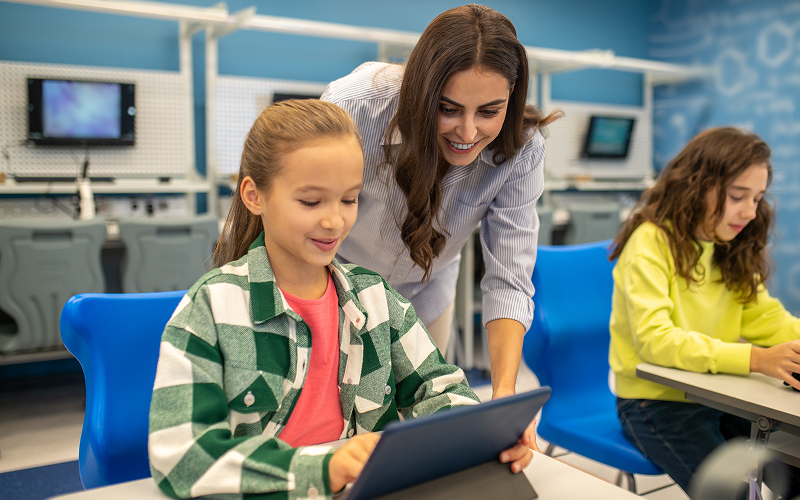
Walk into any IB international school today and you will notice how different the classroom feels compared to a decade ago. Laptops, tablets, and interactive screens are now as common as textbooks and whiteboards once were. Technology, for students, is not just a tool but part of how they think, research, and create. Meanwhile, for teachers, it is a way to connect with learners, track progress, and personalise education. In short, the modern international school does not treat technology as an accessory; it is the foundation of how learning takes place.
Digital Integration in the IB Curriculum
The International Baccalaureate (IB) is built on inquiry, critical thinking, and independent study, and technology gives these principles practical shape. Students in an IB international school turn to online research databases to support essays, share projects on cloud platforms, and use collaborative tools to build presentations with classmates. Teachers can track assignments in real time and offer quick feedback rather than waiting weeks. The result is a faster, more interactive learning cycle where students develop independence but still receive structured support. Technology makes the demanding IB curriculum manageable and ensures that learners are equipped with habits that prepare them for university study.
Learning Without Walls
Technology has taken the classroom beyond four walls. It is common to see blended learning models in an international school, where students watch recorded lectures before class or log in for discussions with experts from different countries. This approach is particularly valuable for IB students because the programme encourages global perspectives and cross-cultural awareness. Online projects allow a student to work with peers globally, practising collaboration across time zones and cultures. Technology is not just a delivery system; it expands the scope of what learning can be.
Smarter Assessments and Feedback
Assessment has also shifted. Instead of only relying on paper tests, IB international schools use digital portfolios, online quizzes, and computer-based evaluations. These tools generate data that highlight patterns in student performance, giving teachers the insight to adjust lessons or provide targeted help. Students can see their own progress mapped out, which makes improvement more tangible. This approach not only supports the high academic standards of the IB but also mirrors what students will face later in university, where digital assessments are now routine.
Fuel for Creativity and Innovation
Technology is not confined to academics. It fuels creativity and problem-solving. Many international schools now provide maker spaces with robotics kits, 3D printers, or coding labs. IB students can design prototypes, produce digital media, or develop software as part of their projects. These experiences nurture adaptability and innovation—skills that will matter long after exams are over. The IB’s aim of developing well-rounded global citizens is supported by giving students practical tools to experiment, create, and push boundaries.
The Other Side of the Equation
Of course, technology brings challenges. Not every student has equal access to devices or reliable internet at home. Schools must also manage issues like screen time, data privacy, and cybersecurity. An IB international school cannot simply provide devices; it must guide students on responsible use and ensure teachers are trained to adapt to changing platforms. Balancing innovation with accountability is part of the ongoing challenge that international schools face as they embed technology more deeply into their culture.
Conclusion
Technology has moved from being optional to being essential in education. This approach, for an IB international school, underpins curriculum delivery, supports assessment, and opens creative opportunities. However, international schools must remain aware of challenges and manage them carefully. Done right, the integration of technology equips students with the skills, flexibility, and mindset they need to succeed in higher education and beyond. Technology, as schools continue to evolve, will remain central to preparing students not just for exams, but for life in an interconnected world.
Contact EtonHouse to give your child the advantage of a future-focused education.
